
One Fabric, Many Products
I remember seeing how one strong denim base could become completely different products — different fits, different washes, different colours and finishes — but underneath, the fabric remained the same. That lesson has stayed with me. For buyers comparing sustainable denim suppliers, it's a useful question to ask upfront: can your supplier help you get more from one well-developed fabric, instead of developing a new base for every style?
The Base Fabric: 99% Cotton, 1% Elastane, Around 12.5oz
Take this as a working example. 99% cotton, 1% elastane, around 12.5oz — a base suitable for developing slim, regular, baggy or wide-leg styles across both men's and women's collections. Then the wash changes the story: dark indigo, vintage light, laser, ozone, tint, light distressing. One fabric suddenly doesn't look like one fabric anymore. Each fit and finish still needs proper testing, but the possibilities start with understanding the base fabric properly.
The B.A.S.E. Approach
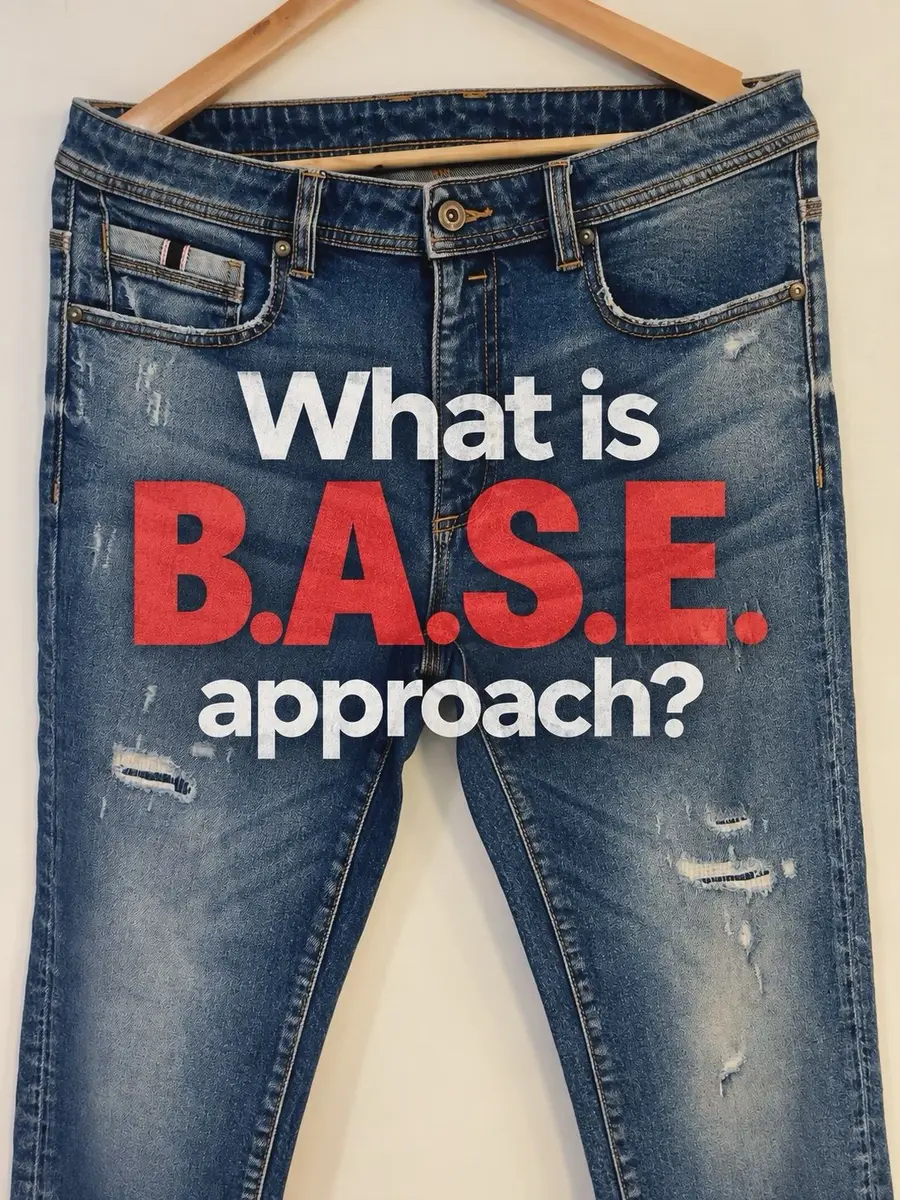
This is why I like the B.A.S.E. approach as a practical framework:
B — Build one strong fabric base.
Get the core fabric right first: weight, stretch, hand-feel and durability, before multiplying styles from it.
A — Add different fits, washes and ideas.
Once the base is proven, develop variations across fit and finish rather than starting from scratch each time.
S — Start around 500 pieces per style and colour. Read the market.
A small, focused test order tells you which combinations of fit and wash actually sell, before you commit real volume.
E — Expand the winners to 5,000 or 10,000 pieces.
Put your production volume behind what's proven to work, with the fabric and wash recipe already validated.
What to Ask Sustainable Denim Suppliers About Repeat Consistency
When choosing sustainable denim suppliers, ask about repeat consistency too: can they reproduce the approved wash, maintain the fit, and secure the fabric when you need to reorder? Development matters, but so does delivery once a product actually works in the market.
For denim buyers, there's a bigger benefit to this approach. You can concentrate fabric volume instead of spreading it across multiple bases. You learn how that fabric behaves, how it washes, how it performs — and if it keeps delivering, you may not need to replace it next season. Keep the base, change the story.
One Fabric Alone Doesn't Prove Sustainability
But one fabric alone doesn't prove sustainability. When comparing sustainable denim suppliers, ask for traceability and measured evidence behind environmental claims — low-water eco wash processing such as laser, ozone and e-flow/nano-bubble finishing should be backed by actual process data, not just the presence of the equipment. The fabric matters. The processes behind it matter just as much.
Practical Questions Before You Commit a Denim Programme to One Base
Before concentrating a season's volume around a single base fabric, it's worth confirming a few things directly with the mill and the manufacturer. Is the fabric stocked, or does it need to be woven to order — and what lead time does each option carry? What is the minimum fabric commitment per colour or finish, and does that match your planned order structure across the B.A.S.E. stages? How is shade consistency managed across dye lots if a reorder happens months after the original? These aren't exciting questions, but they're the ones that determine whether "keep the base, change the story" actually holds up once a style moves from a 500-piece test into a 5,000 or 10,000-piece repeat order.